The State of Guanajuato is the second-largest producer of Agave tequilana Weber blue variety; seven of its municipalities form part of the territory of the Tequila Appellation of Origin (DOT).
The first agreement was signed in 2021, and its renewal in 2025 reaffirms the shared commitment to environmental preservation and the sustainable production of Tequila.
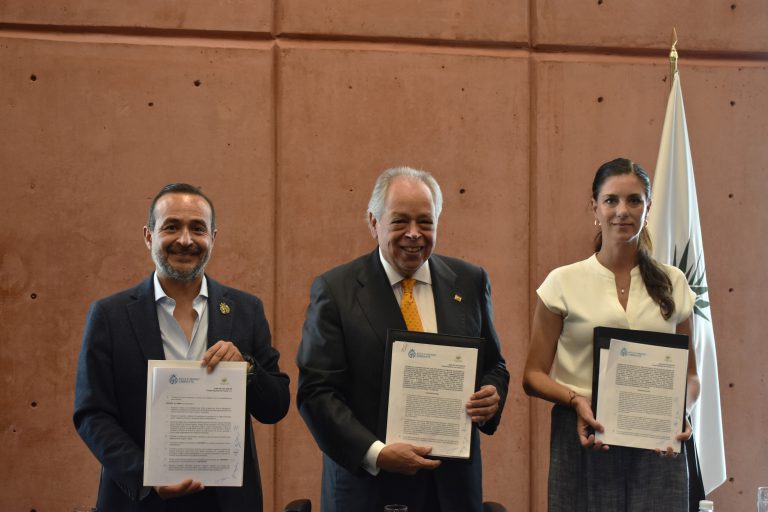
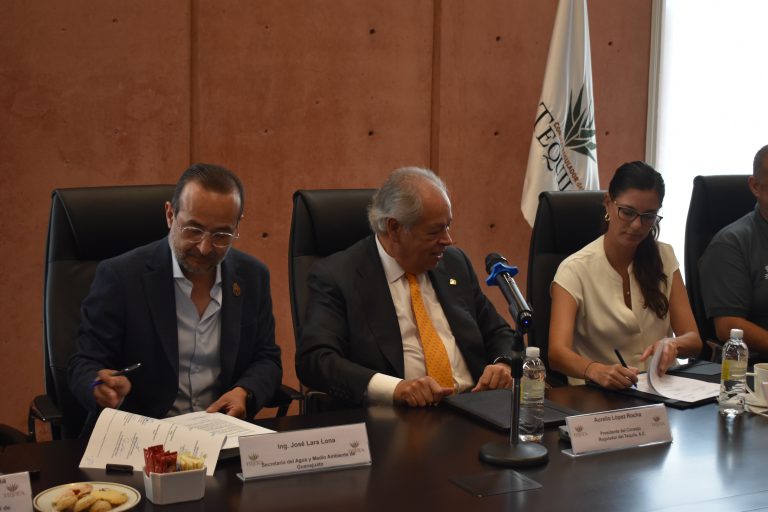
Zapopan, Jalisco, October 23, 2025. —The Government of Guanajuato, through the Secretariat of Water and the Environment, and the Tequila Regulatory Council (CRT), renewed their collaboration agreement with the goal of strengthening joint actions in favor of sustainability within the Tequila sector.
One of the key points of this agreement is to continue ensuring that agave cultivation in Guanajuato, for Tequila production, is carried out without causing deforestation, through the ARA (Environmentally Responsible Agave) Certification Mark.

“The importance of Guanajuato in the Tequila agroindustry carries great weight today, mainly due to its contribution to agave cultivation, the raw material of Tequila. Since the implementation of ARA, a total of 102,436,896 agave plants have been registered under this mechanism in the state, established across 30,734 hectares within the seven municipalities that form part of the Tequila Appellation of Origin territory. Currently, Guanajuato represents 11.85% of the total agave inventory, consolidating itself as the second state with the highest production of Agave tequilana Weber blue variety, with 5,802 registered agave growers—those who work the land with passion and respect,” stated CRT president Aurelio López Rocha during his address.
The first agreement was signed in 2021, and its renewal in 2025 reaffirms the shared commitment between the CRT and the Government of Guanajuato to environmental preservation and the sustainable production of Tequila.

The territory of the Tequila Appellation of Origin (DOT) is made up of 181 municipalities across five Mexican states. In Guanajuato, the DOT includes the municipalities of Abasolo, Manuel Doblado, Cuerámaro, Huanímaro, Pénjamo, Purísima del Rincón, and Romita.
For his part, the Secretary of Water and the Environment, José Lara Lona, reaffirmed Guanajuato’s commitment to conserving natural resources and the sustainable production of agave, emphasizing the importance of joint efforts to achieve this.
“The purpose, as already mentioned, is to have a quality product without diminishing our natural resources” … “We are renewing our vows regarding Environmentally Responsible Agave, and all seven municipalities in the state of Guanajuato and their producers are committed to this” … “Tequila is tradition, it is love for our homeland, and this is our way of doing our part,” emphasized the secretary.
In 2021, the CRT, together with the Government of the State of Jalisco, jointly registered the ARA Certification Mark with the Mexican Institute of Industrial Property (IMPI), taking a decisive step toward achieving Deforestation-Free Tequila.
In this regard, the Secretary of Environment and Territorial Development of Jalisco, Paola Bauche Petersen, emphasized that ARA is an example of coordination among states and of what can be achieved when a shared vision is pursued.
“ARA certification is one of our greatest treasures” … “We want to thank the CRT because without you, ARA would not be possible. You can continue counting on us, now and even more so, to keep strengthening this effort and growing together. Congratulations on this renewal,” stated the head of SEMADET during her remarks.
To date, more than 2.7 million liters of ARA-certified Tequila have been produced, a figure that continues to grow.
Other actions carried out by the tequila agroindustry to meet sustainability goals include the adoption of Good Agricultural Practices in agave cultivation, efficient use of energy and water, waste treatment, circular economy measures, among others—reflecting its commitment to the environment and to future generations.