*The Congressional Tequila Caucus is a bipartisan group of U.S. lawmakers focused on highlighting the economic, cultural, and diplomatic importance of tequila, as well as strengthening the trade relationship between the United States and Mexico.
*U.S. Congress members toured CRT facilities and distilleries and held discussions with representatives of the tequila supply chain as well as Jalisco Governor Pablo Lemus Navarro and members of his cabinet.
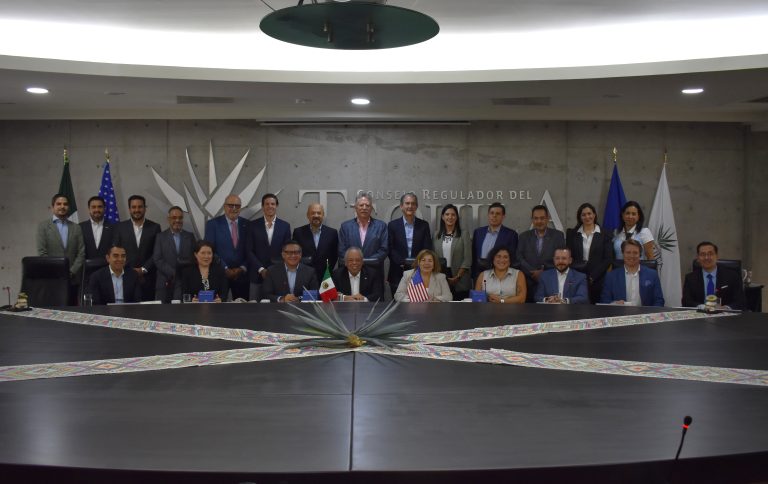
Zapopan, Jalisco – September 22, 2026 – With the aim of strengthening the bilateral relationship between Mexico and the United States and gaining firsthand insight into the work of the tequila agro-industry, U.S. Congress members Salud Carbajal, Linda T. Sánchez, and Emily Randall—members of the Congressional Tequila Caucus—visited the state of Jalisco.
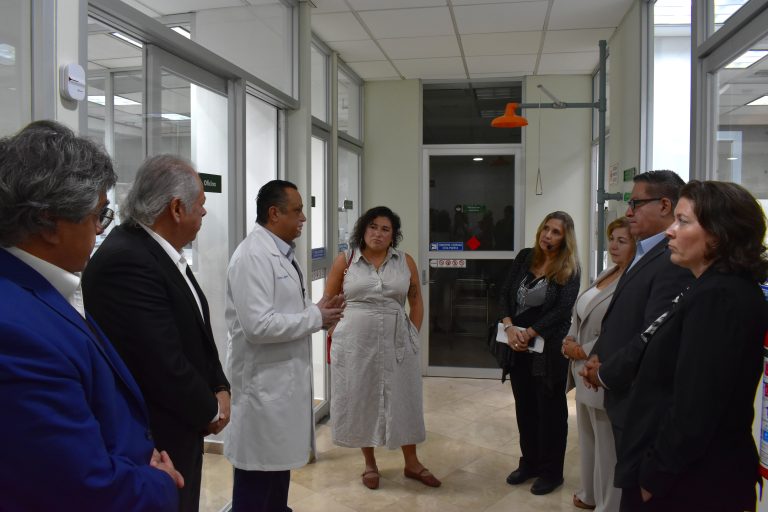
As part of their agenda, the lawmakers toured the laboratories of the Tequila Regulatory Council (CRT) and held a dialogue with representatives of the Agave-Tequila supply chain. During the visit, they learned about the current landscape of this iconic Mexican spirit, as well as the work the CRT performs to guarantee its authenticity, quality, and protection.
During his welcoming remarks, CRT President Aurelio López Rocha thanked the members of Congress for their interest in Tequila and for creating a space for this Mexican product within the U.S. Congress.
“A year ago in Washington, the CRT had the opportunity to thank the Members of Congress who provided a bipartisan platform for Tequila through the Congressional Tequila Caucus. Today, that relationship has come full circle: you are here in Jalisco—at the source—to experience firsthand the land, the people, the institutions, and the controls behind every bottle of Tequila,” the CRT President noted.
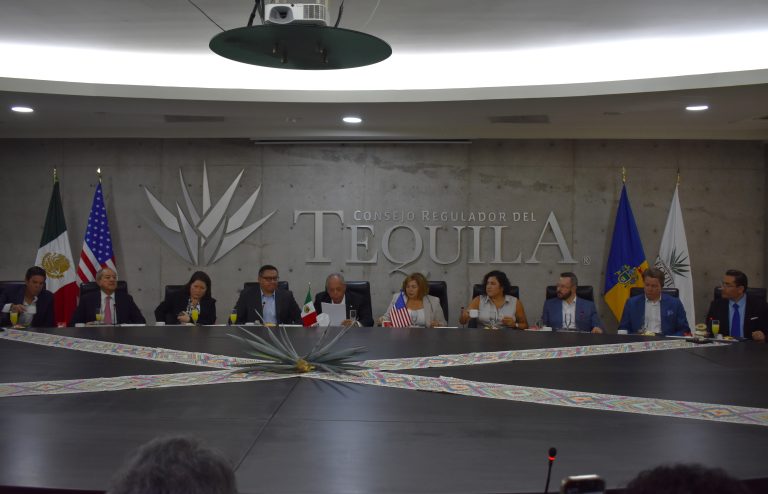
During the dialogue, held at the headquarters of the Tequila Regulatory Council (CRT), seven key areas were highlighted to strengthen cooperation between Mexico and the United States regarding Tequila.
Notable among these were preserving the recognition of Tequila as a distinctive product within the USMCA, maintaining duty-free access to the U.S. market, continuing the bilateral Memorandum of Understanding on Tequila trade, and strengthening technical cooperation between the laboratories of the Alcohol and Tobacco Tax and Trade Bureau (TTB) and the CRT.
Also proposed was a joint approach to addressing products that misuse the Tequila Appellation of Origin—prioritizing its protection at all times—as well as strengthening the Certificate of Authenticity for Tequila Export (CAETI).
“Consider us a technical, transparent, and enduring ally. Our doors are open, our data is available, and we are committed to working constructively with authorities, the industry, and the U.S. Congress to preserve the integrity of Tequila and consumer trust,” stated Aurelio López Rocha, President of the CRT.
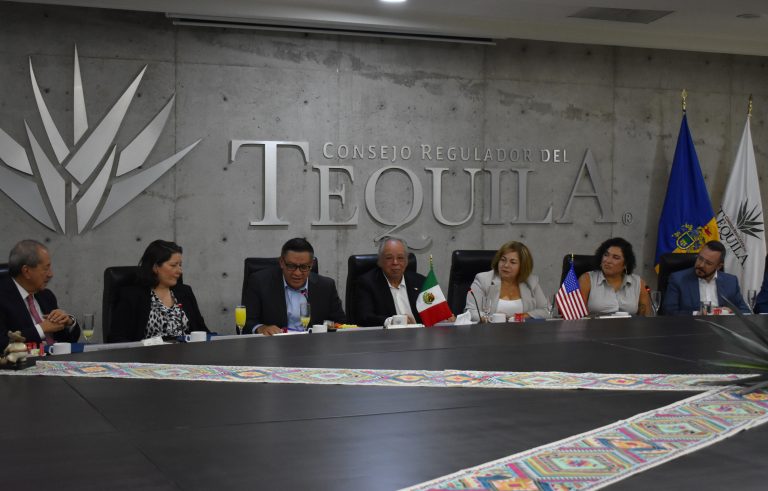
For his part, Congressman Salud Carbajal—Co-Chair of the Congressional Tequila Caucus and a member of the Committee on Agriculture and the Committee on Transportation and Infrastructure—highlighted his Mexican roots and the bond that Tequila represents between Mexico and the United States.
“Now, regarding Congress, another element that—to me—rounds out the Mexican heritage—something very visible and easily identifiable—is Tequila.” “…and the impact it has on the economic relationship between the United States and Mexico, as well as the cultural aspect; this caucus is bipartisan.” — Congressman Salud Carbajal.
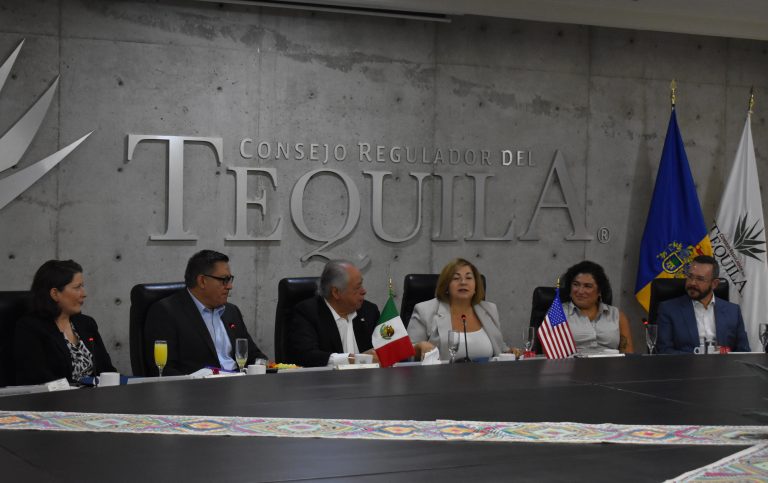
In their remarks, Congresswoman Linda T. Sánchez and Congresswoman Emily Randall expressed their willingness to collaborate with the Tequila industry on initiatives that benefit both countries.
“My work right now focuses on tariffs, free trade agreements, taxes—all the fiscal matters that are important to the U.S. economy and to foreign relations with other countries.”
“We hope to learn about the process and how we can help build networks between the two countries, and perhaps—through meetings like this—strengthen the relationship between our nations.” — Congresswoman Linda Sánchez.
“We all need to grow and strengthen our relationships so that both of our economies can grow and remain strong.” — Congresswoman Emily Randall.
Also present at the meeting was Néstor Eduardo García Romero, Director of Planning, Evaluation, and Monitoring for the General Strategic Coordination of Economic Growth and Development of the Government of Jalisco, the president of the National Chamber of the Tequila Industry (CNIT), Roberto Ciprés Cruces, Jack Thompson, Vice President of Federal Government Relations for the Distilled Spirits Council of the United States (DISCUS), and Elizabeth Hoffman Franolich, U.S. Consul General in Guadalajara, who highlighted the importance of strengthening ties between the State of Jalisco and the United States, as well as the relationship with the Tequila agribusiness sector.
“Relations between countries begin with relations between people—trust, goodwill, and a willingness to listen to one another. That is why I deeply value the relationship with each member of the Tequila Caucus here in Jalisco and with every company you represent. Your commitment to learning more about this important industry—by interacting directly with our Mexican partners and reinforcing economic ties between our two countries—will contribute significantly to the U.S.-Mexico relationship.”
As part of their itinerary in Jalisco, the U.S. members of Congress also held a private meeting with the Governor of Jalisco, Pablo Lemus Navarro, and members of his cabinet.
Additionally, they visited three distilleries to gain firsthand insight into the Tequila production process, aiming to further strengthen its position in its primary market—the United States—through various events and joint initiatives.
Key Facts:
o Tequila supports more than 200,000 jobs in the United States, spanning the retail, hospitality, distribution, and manufacturing sectors.
o Tequila sales in the United States generate over $1.4 billion in federal and state tax revenue.
- From January to August 2026:
o Tequila production totaled 402.5 million liters.
o Tequila exports totaled 288 million liters; the United States was the primary destination, receiving 232.9 million liters—equivalent to 81.02% of total exports.